Writing Other Languages
Whenever you write a story that involves more than one country or culture (or world), there is the possibility that people will speak different languages. How you deal with this, as the writer, is up to you, partially based on your own interests but also what kind of story it is. Sometimes you will want to make the language difference important in the story and sometimes not.
We are going to look at three solutions to the issues of different languages in a story and when you might want to use each.
Solution 1: Ignore it
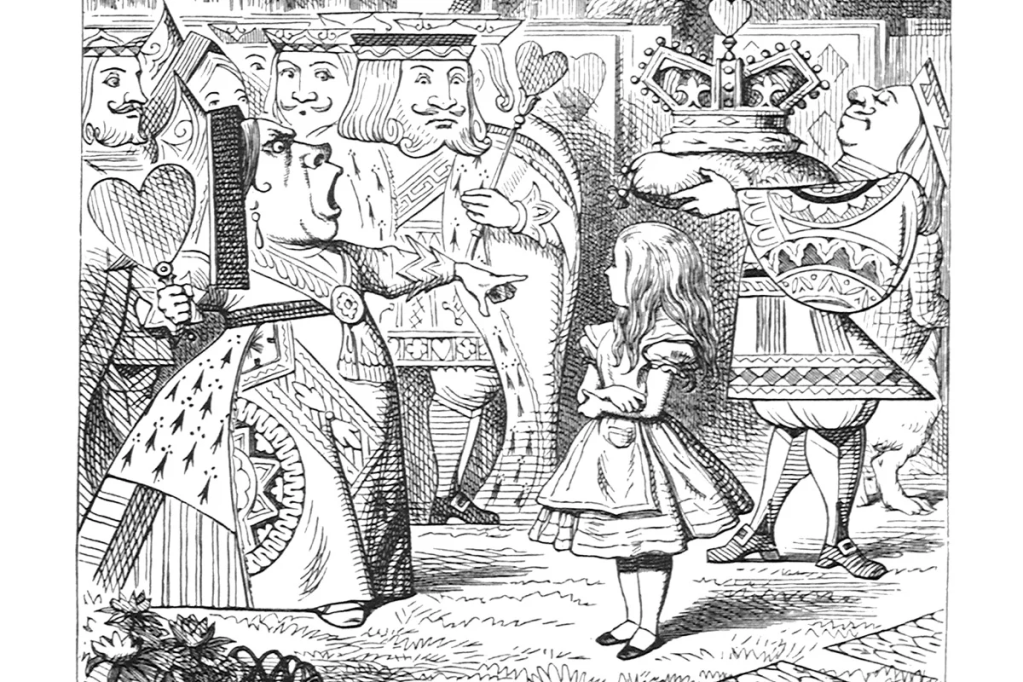
Alice finds herself in Wonderland. Dorothy finds herself in Oz. Lucy finds herself in Narnia. All of these girls talk to the inhabitants of these other worlds with no problem because everyone speaks English (or Japanese if you’re reading a Japanese translation; you get the idea).
Realistically, if you go to another world, they are not going to speak English. Even with Narnia, which was founded by people from England (see The Magician’s Nephew), the language would have changed over the thousands of years since then.
However, these are all stories for kids, so they don’t have to be realistic. Kids don’t care about things like language barriers, and it would bring the story to a screeching (and boring) halt if the characters weren’t able to talk to each other.
For stories in the modern world where characters travel around the world, it is not uncommon to ignore language differences if they are speaking English since it’s realistic that people in other countries, especially those people who work internationally, would all know English. Of course, this would be less realistic if the characters spoke Vietnamese or Xhosa and everyone they met as they traveled around the world spoke those fluently.
Solution 2: Solve it Quickly
This is the next step when dealing with language differences in stories. With this solution, you acknowledge that there is a language difference but quickly overcome it so that the story isn’t affected by it.
In Robinson Crusoe, the native Friday doesn’t speak English when they first meet, but the story skips ahead in time and he learns it and then they can talk. It’s not a quick thing in real life, but the story doesn’t spend much time on it.
In science fiction or fantasy stories, the language barrier can be solved by technology or magic. Examples are the universal translator in Star Trek or the babel fish in Hitchhiker’s Guide to the Galaxy, where a small fish sits inside your ear and translates everything. In fantasy stories it’s as easy as having a spell or magic item that lets you understand other languages.
In The Lord of the Rings, Tolkien gets around the language barrier question in several ways. The main one is having a common language called Westron that most people speak in addition to their own language, which lets people move around the world and interact with others. The One Ring also gives the power to understand other languages so when Sam is wearing it, he understands the orcs speaking, even though realistically they’d all be speaking Black Speech together.
Solution 3: Make it a Plot Point
With this method, the characters do not know each other’s language and have to work out a way to communicate. They make mistakes and there are probably misunderstandings. With this solution, finding a way to communicate becomes one of the plot points and if you have the interest for it, this can be very powerful, since there is a lot of built-in conflict and drama around communication problems.
C.S. Lewis ignored language altogether in The Chronicles of Narnia but got deep into it in his science fiction book Out of the Silent Planet. In that, he gets into the grammar and structure of the Martian languages, and it becomes a major plot point since at the end he can communicate with the people there and has to translate for his companions who are less than fluent and make plenty of mistakes.
(Side note: if you want to read a story that REALLY gets into language barriers, read Embassytown, by China Mieville. It has some absolutely fascinating world building with alien languages).
Even if the communication barrier is not the main plot point, it can be a powerful source of conflict and drama. However, you need to be willing to put story time into developing the idea. If not, it is best to use one of the other methods. It also helps if you have studied a foreign language yourself since you can use your experiences of confusion and struggle in the story.
In summary, there are various ways to deal with language differences and barriers in a story and that depends on the type of story you are writing and what you are interested in. I love languages myself, so I have written many stories with communication barriers between cultures. However, if it’s not something you are interested in, you can deal with it more quickly, or even not at all.



This is certainly a topic you know all about. I admire you so much for learning how to speak Arabic. It will be one more language to add to your novel writing.
LikeLiked by 1 person
That would be cool. My ultimate dream when I learn a new language is to be able to read books in it. I don’t get that far with most of them though.
LikeLiked by 1 person